
15 September 2026
Resin Driveways In North Hykeham, Waddington And Bracebridge Heath: Ground Conditions On Lincoln's Southern Edge
There is a hill between these three villages and it decides almost everything. Waddington and Bracebridge Heath sit on top of the Lincoln Cliff, the limestone escarpment that runs for more than fifty miles between Grantham and the Humber and is cut through only twice along the way. North Hykeham sits below it, out on the flat, on ground that has been dug for sand and gravel within living memory. The 2021 census put 16,844 people in North Hykeham and 5,789 in Bracebridge Heath, and a fair share of those households are now looking at tired concrete and wondering what to replace it with. Here is the part that rarely makes it into a quote: the same driveway, drawn the same way, needs a different base in each of these places. Three miles of road, three different answers.
Three Villages, Two Very Different Grounds

Look at the road south from the city and you can read the geology off the gradient. Bracebridge Heath and Waddington are up on the limestone plateau, both of them classic Cliff villages, with views back down over the Witham. North Hykeham never climbs at all. It spreads across the valley floor toward Whisby, and the difference in level between a house on Sleaford Road and one near Apex Lake is enough to put them in separate worlds as far as groundwork is concerned.
That matters because resin bound surfacing is only ever as good as what supports it. The layer of resin and stone on top runs between fifteen and twenty five millimetres. It has no structural job beyond wearing well and letting water through. Everything that decides whether a drive is still flat in a decade happens below it, which is why an installer who has not looked at your ground has not really quoted for your drive.
All three villages fall under North Kesteven for planning, so at least one part of the process is consistent. The ground underneath refuses to cooperate in the same way.
Waddington: Rock Closer To The Surface Than You Expect
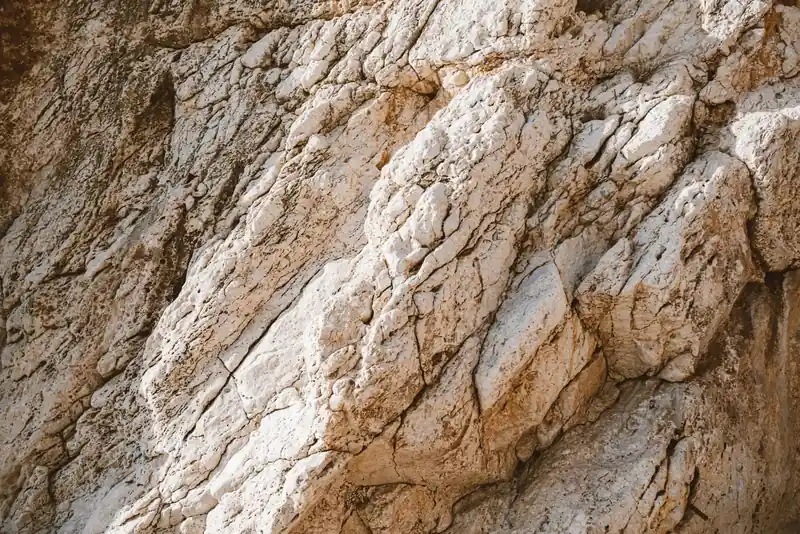
Waddington grew up around its airfield, which was founded in November 1916 and is one of the oldest in the country. The village you see today is mostly the result of that: married quarters built alongside the station, then waves of ordinary brick and tile housing spilling down the slope toward Lincoln, with the older limestone cottages left in the middle of it.
Build on a limestone ridge and the rock is sometimes not far down at all. Hit it at 200mm and you cannot keep digging to whatever formation level you had in mind, and breaking it out for a domestic drive is not a sensible use of anybody’s money.
So you go up instead. Raising the finished surface then has to be squared with the door threshold, the garage floor, the boundary and the fall out to the road. Handled at the design stage it is a non-event. Discovered by a digger driver on a Monday morning it turns into a bad week.
The upside is that limestone carries weight without complaint. It does not shrink in a dry August and swell back in February the way a plastic clay does, so once you are onto it you are onto something dependable. Sloping plots on the scarp side need a bit more thought about where surface water goes, because gravity is doing the design work whether you like it or not.
Bracebridge Heath: Plateau Ground And Redeveloped Land
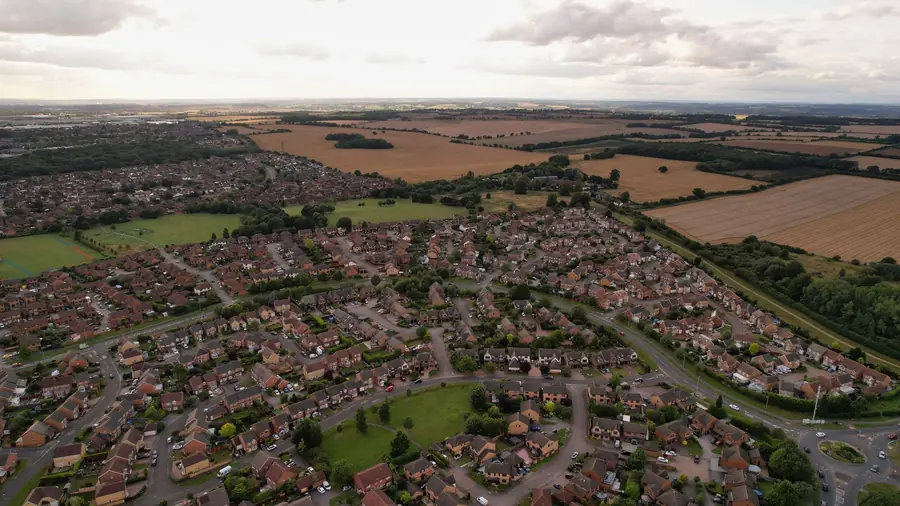
Bracebridge Heath was almost nothing for most of its history. In the 1870s the parish held a few hundred residents, a church, a vicarage and the county asylum on Sleaford Road. Everything else arrived after the middle of the twentieth century, spreading north toward the city and south toward Waddington, and it is still arriving.
The result is a patchwork of build eras that a single village name hides completely. A 1960s semi, a 1990s cul-de-sac and a plot finished last spring can sit within a few hundred metres of each other, each with a different story under the front garden.
The old hospital land is its own case. St John’s closed in December 1989 and the site was redeveloped for housing, with the original buildings kept and listed. Wherever a large institutional site has been cleared and rebuilt, old foundations, abandoned service runs and demolition material are somewhere below. You find them by digging, not by guessing.
Plateau ground is generally decent to build on. The caution here is not about strength, it is about assuming uniformity across a village that was assembled in pieces.
North Hykeham: Sand, Gravel And A Valley That Has Been Quarried
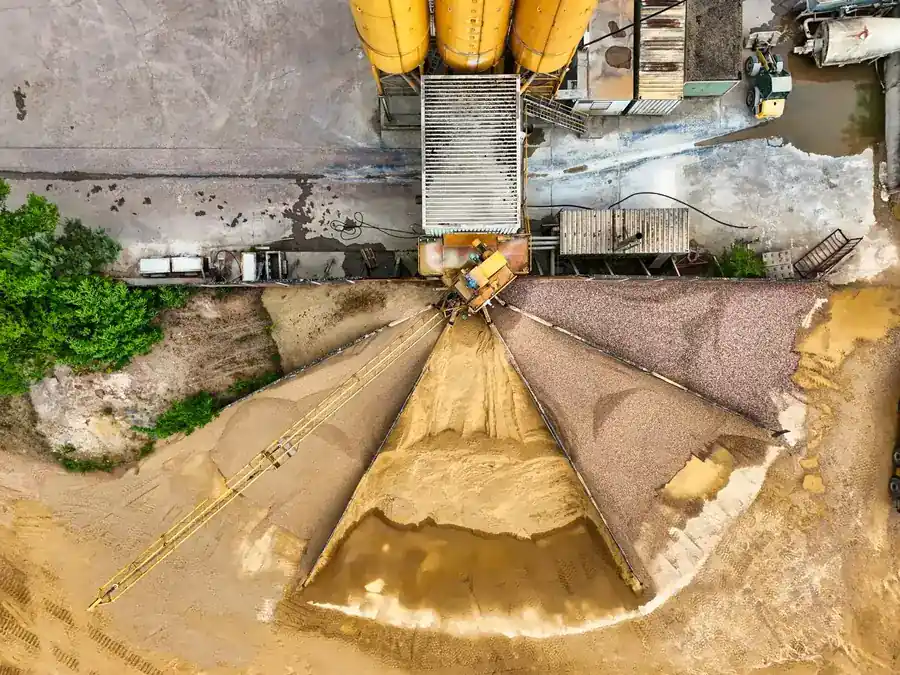
North Hykeham became a town by absorbing Lincoln’s overspill. The city had a historic core, awkward topography and flood risk in the wrong places, so growth went out here instead, and council estates through the 1960s and 1970s turned a village into something considerably bigger.
What makes it interesting underfoot is the mineral. This stretch of the Witham valley is river sand and gravel country, and it has been worked hard. Apex Lake, the Millennium Green and the wider spread of water toward Whisby are all former extraction sites that filled in after the diggers left, and commercial quarrying continues in the area. Lincolnshire remains the largest producer of sand and gravel in the East Midlands, which you can see for yourself in the county council’s minerals and waste planning material.
For a driveway, granular ground is a mixed blessing. It drains beautifully, which suits a permeable surface, and a soakaway in clean gravel is usually a pleasure. But loose sand and gravel needs proper compaction in layers rather than a single pass with a plate, and where the deposits turn silty or the water table sits close to the surface, the free drainage you were counting on can quietly vanish in midwinter. Being near an old pit also means being near ground that was disturbed and backfilled, which is a different question again.
Made Ground And The Newer Estates
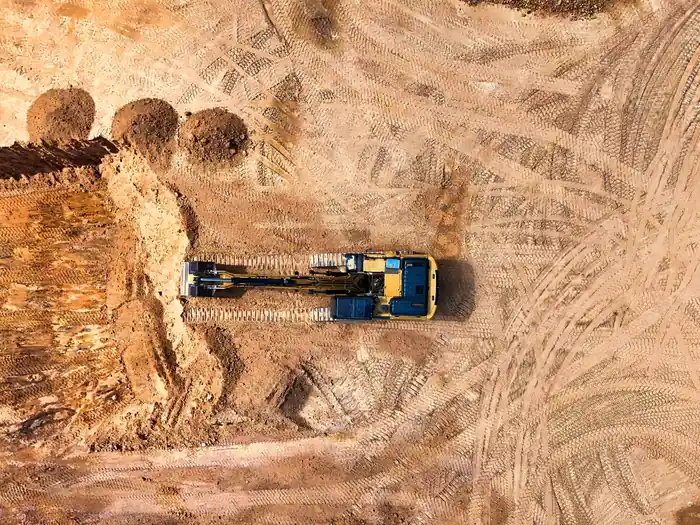
Every one of these villages has picked up new housing over the last twenty years, and new housing arrives with made ground. When a site is levelled, material gets cut from the high side, pushed to the low side and compacted to a standard that suits roads, plot platforms and gardens. It is not a defect. It is simply not the same as undisturbed natural ground, and it does not behave the same way.
The bits that catch people out are the edges. A plot that was on the fill side of a level change can have a metre or more of imported material under the front garden. Service trenches running to the meter box were dug and backfilled after the main compaction was done. The apron in front of a garage is often the youngest, least consolidated ground on the entire plot. Lay a surface across all of that without checking and the settlement shows up as a dip, usually within the first two winters, usually right where the car sits.
None of this rules out a resin drive on a new estate. It does mean the trial hole goes where the fill is deepest rather than somewhere convenient, and the stone layer gets specified for the worst part of the plot rather than the best. Our longer piece on what sits under a resin driveway in Lincoln works through the layers themselves.
Whether Your Drive Can Actually Drain Where It Sits

A permeable driveway only stays permeable if the water has somewhere to go once it is through the surface. That is a question about your plot, not about the product, and the three villages answer it differently.
On the limestone, water can drop away through fissures far faster than you would guess, or sit on a tighter band and go nowhere. In the gravels around North Hykeham it usually moves freely until the winter water table rises to meet it. On made ground it does whatever the fill allows, which could be anything. The only honest way to settle it is a percolation test: dig a pit, soak it, refill it, and time how far the level falls. An afternoon’s work removes all the guessing.
Where infiltration is genuinely poor, the drive does not have to become a sealed slab. Options include a shallower and wider soakaway spread across more ground, a lined attenuation layer that holds water and releases it slowly, or a connection into an existing surface water route where one lawfully exists. Getting the drainage right is also what keeps the job outside planning control. The Planning Portal’s guidance on paving front gardens is clear that a permeable driveway of any size does not need permission, while a traditional impermeable one over five square metres does.
What All This Changes About The Job Itself

Put the three villages side by side and each one tends to throw up its own question. In Waddington it is usually about depth and levels, because of what the digger might meet on the way down. In North Hykeham it is about compaction, and about where the winter water table sits. Bracebridge Heath asks what previous occupiers left behind. A new-build plot in any of them asks how much of the front garden is imported fill.
On the quote itself that boils down to four decisions. How deep we dig. Whether a separation fabric goes between the ground and the stone, which it should anywhere soft or silty. How much open-graded stone goes in, and in how many compacted layers. And where the water ends up afterwards. Get those right and the rate per square metre is almost a footnote. Get them wrong and no amount of expensive resin rescues the job.
There is a planning footnote too. Permitted development rights are not identical everywhere, and a small number of properties have had them withdrawn. If you want certainty before you commit, North Kesteven District Council’s householder planning enquiry service will give you a written view at no cost, which is worth having on file.
Frequently Asked Questions
Is the ground in Waddington different from the ground in North Hykeham?
Completely. Waddington sits on top of the Lincoln Cliff, where Lincolnshire Limestone often turns up within a spade’s depth of the lawn. North Hykeham is on the valley floor a couple of miles away, built over river sands and gravels of the sort still being quarried at Whisby. One tends to give you rock you cannot easily dig, the other gives you a loose deposit that drains well but wants proper compacting. The villages are neighbours on a map and are not neighbours underground.
Why do installers keep asking about my estate’s build date?
Because it tells us what is likely to be sitting under the topsoil. Married quarters and postwar housing near the airfield usually have modest, shallow drives with decent natural ground beneath. Plots finished in the last twenty years often stand on levelling fill brought in during the site works, and fill that was fine for a lawn is not automatically fine to park a car on. Knowing roughly when the house went up shapes where we dig the trial hole.
Will a soakaway work on the plateau at Bracebridge Heath?
Often yes, and occasionally it disappoints. Fissured limestone can swallow water quickly, but there are bands within it that behave more like a lid than a sponge. That is why we would rather dig a pit, fill it and time it than promise anything from a postcode. If the test comes back slow, the answer is usually a shallower, wider soakaway or a connection to an existing surface water route, not a thicker drive.
Do I need planning permission for a resin drive in North Kesteven?
Not for a permeable one in normal circumstances. Resin bound laid on an open-graded base drains through itself, which puts it outside the rule that catches hard impermeable surfaces over five square metres in a front garden. Flats, maisonettes and homes with permitted development rights withdrawn are the exceptions worth checking, and North Kesteven District Council will confirm your own position free of charge if you ask them.
Does all this ground variation make a southern village driveway expensive?
It makes it variable rather than expensive. Two houses the same size, one in Waddington and one in North Hykeham, can need genuinely different excavation, different stone quantities and different drainage, so identical square metre pricing for both would mean one of them is subsidising the other. The figure that matters on a quote is not the rate, it is whether anyone measured your ground before writing it.
If you live in one of the villages along the southern edge of the city and you want somebody to dig a hole and tell you what is actually down there before quoting, get a free quote for your driveway and we will start with the ground rather than the brochure.